
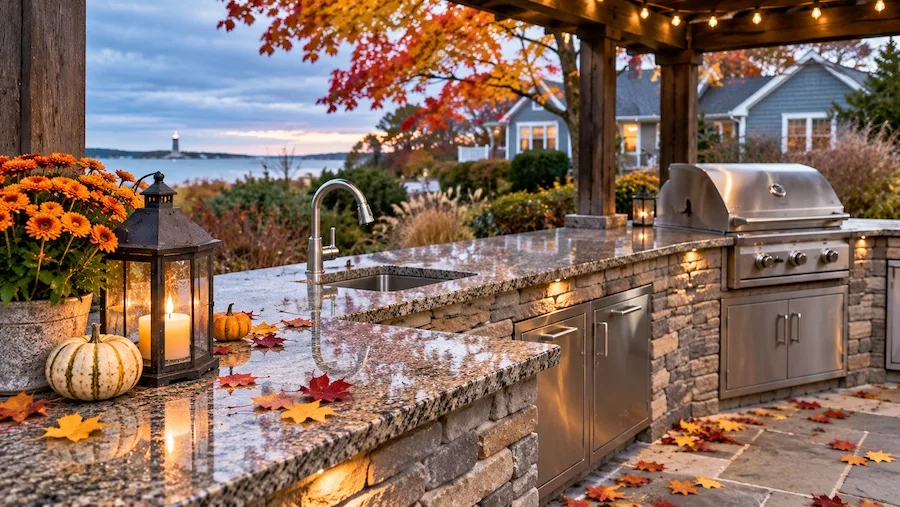
As November arrives in Delaware, outdoor kitchens begin to see less use. The warm summer evenings are behind us, temperatures are dropping, and homeowners are gradually moving their cooking and entertaining activities indoors.
But before winter settles in, there is one important task worth adding to your seasonal home maintenance checklist: preparing your outdoor kitchen for colder weather.
From Wilmington and Newark to Rehoboth Beach, Lewes, and Bethany Beach, Delaware homeowners have different outdoor living environments. Coastal properties face additional exposure to moisture, salt air, and changing weather conditions, while inland homes must also prepare for freezing temperatures and winter precipitation.
If your outdoor kitchen includes granite countertops, stone surfaces, cabinets, or an outdoor sink, November is an excellent time to inspect everything and prepare it for the months ahead.
Here is how to protect your outdoor kitchen before winter arrives.
1. Start With a Thorough Cleaning
Before covering your outdoor kitchen, give every surface a proper cleaning.
During spring and summer, outdoor countertops collect dust, pollen, food residue, grease, and environmental debris. Leaving these materials on the surface throughout winter can make spring cleanup more difficult.
For granite countertops, use a cleaner specifically designed for natural stone. A soft cloth and mild cleaning solution are usually sufficient for everyday dirt and residue.
Pay particular attention to:
- Areas around outdoor sinks and faucets.
- Countertop seams and joints.
- Spaces around grills and cooking equipment.
- Edges where water and debris can collect.
- Areas beneath appliances and accessories.
Avoid acidic cleaners, vinegar, and abrasive cleaning products that may affect the stone’s finish or protective sealer.
Allow the countertop to dry thoroughly before covering the outdoor kitchen.
2. Protect Granite Countertops From Winter Moisture
Granite is a popular choice for outdoor kitchens because of its natural durability and ability to withstand outdoor conditions.
However, natural stone is not completely immune to moisture.
Some granite varieties are more porous than others. If water enters existing cracks, seams, or vulnerable areas and subsequently freezes, expansion can contribute to damage.
This is particularly important during Delaware winters, when temperatures can fluctuate above and below freezing.
Before winter begins, inspect your granite countertop for:
- Small cracks or chips.
- Deteriorating seams.
- Damaged areas around sinks.
- Signs of water absorption.
- Worn or missing protective sealer.
If your granite countertop has not been sealed recently, consult a stone professional about whether resealing is appropriate.
A suitable penetrating sealer can help reduce water absorption, although it cannot make granite completely waterproof.
3. Do Not Forget Your Outdoor Kitchen Plumbing
One of the most important parts of winterizing an outdoor kitchen has nothing to do with the countertop itself.
Water left inside outdoor plumbing can freeze, expand, and damage pipes, faucets, and connections.
If your outdoor kitchen includes a sink or connected water supply, prepare the plumbing before freezing temperatures become a concern.
Consider these steps:
- Shut off the water supply to outdoor fixtures.
- Drain exposed water lines where appropriate.
- Disconnect and store garden hoses.
- Follow the manufacturer’s instructions for outdoor faucets.
- Protect exposed plumbing with suitable insulation.
- Arrange professional winterization if your system has complex plumbing.
Do not assume that shutting off the faucet alone is sufficient. Water may remain inside connected pipes and fittings.
Proper winterization can help prevent costly plumbing repairs when spring arrives.
4. Choose the Right Cover for Your Outdoor Countertops
Covering an outdoor kitchen is one of the simplest ways to reduce exposure to winter weather.
However, not every cover offers the same level of protection.
A good outdoor kitchen cover should:
- Resist rain and snow.
- Fit securely without excessive pressure on countertop edges.
- Allow appropriate ventilation.
- Reduce exposure to dirt and debris.
- Be suitable for the materials used in your outdoor kitchen.
Avoid trapping moisture beneath an improperly fitted cover. Poor ventilation can encourage condensation and create additional problems.
If your outdoor kitchen has a granite countertop, make sure the cover protects the entire surface while allowing moisture to escape.
For coastal properties in Delaware, choosing weather-resistant materials is particularly important because salt air and moisture can accelerate the deterioration of certain outdoor fixtures and hardware.
5. Prepare Your Outdoor Cabinets and Appliances
Countertops are only one part of an outdoor kitchen.
Cabinets, grills, refrigerators, and other appliances also need attention before winter.
Outdoor cabinets should be inspected for loose hardware, damaged finishes, and areas where moisture can enter.
If your outdoor kitchen includes stainless steel appliances, clean their exterior surfaces with products recommended by the manufacturer. Salt deposits and environmental residue should not be left untreated.
For refrigerators and other electrical appliances, follow the manufacturer’s winter storage instructions. Some appliances are not designed to operate in freezing temperatures.
Grills should also be cleaned thoroughly, with grease and food residue removed before extended storage.
Taking care of these components helps protect the entire outdoor kitchen rather than focusing on the countertop alone.
6. Granite or Quartz: Which Is Better for an Outdoor Kitchen?
Homeowners planning an outdoor kitchen renovation often ask whether granite or quartz is the better countertop material.
The answer depends largely on where the countertop will be installed and how much exposure it will receive.
Granite for outdoor kitchens
Natural granite is often a suitable choice for outdoor countertop applications.
It offers:
- Natural resistance to heat.
- Distinctive patterns and colors.
- Strong resistance to everyday wear.
- A durable surface when properly selected and maintained.
However, not every granite variety performs identically outdoors. Porosity, existing defects, installation quality, and exposure to freezing conditions should all be considered.
Quartz for outdoor kitchens
Engineered quartz is popular indoors because of its consistent appearance and relatively low maintenance requirements.
However, traditional engineered quartz contains resin, which can be vulnerable to prolonged UV exposure and outdoor temperature conditions.
Direct sunlight may cause discoloration in some products, while temperature extremes can affect the material.
For this reason, traditional engineered quartz is generally not the first choice for permanently exposed outdoor kitchens unless the manufacturer specifically approves the product for that application.
What about porcelain?
Porcelain slabs are another option worth considering for outdoor kitchen projects. Certain products are specifically manufactured for exterior applications and offer resistance to UV exposure and weather conditions.
Always verify the manufacturer’s outdoor-use specifications before selecting a countertop material.
7. Special Considerations for Coastal Delaware Homes
Outdoor kitchens in Rehoboth Beach, Lewes, and Bethany Beach can face environmental conditions that differ from those in inland Delaware.
Salt air, coastal moisture, wind, and seasonal temperature changes can affect outdoor fixtures, cabinetry, and countertop installations.
Homeowners in these areas should pay particular attention to:
Metal hardware: Choose corrosion-resistant hardware and inspect exposed fasteners periodically.
Countertop seams: Check joints and connections for deterioration that could allow moisture to enter.
Outdoor cabinetry: Look for signs of moisture intrusion, especially around doors, hinges, and lower cabinet sections.
Protective covers: Use weather-resistant covers designed for outdoor kitchen equipment.
Stone maintenance: Follow the care and sealing recommendations for the specific granite variety installed.
These precautions can help extend the useful life of an outdoor kitchen in Delaware’s coastal environment.
8. Create a Spring Reopening Checklist
Winterizing your outdoor kitchen is only half the job. When warmer weather returns, you will want everything ready for the first outdoor gathering of the year.
Before reopening your outdoor kitchen in spring, inspect the following:
- Remove winter covers and allow surfaces to dry.
- Check granite countertops for cracks or chips.
- Inspect seams and joints.
- Examine plumbing connections for leaks.
- Check outdoor cabinets for moisture damage.
- Clean grills and appliances before use.
- Verify that electrical connections are safe.
- Inspect hardware for corrosion.
If you notice cracks, loose connections, or significant surface damage, address those problems before returning the kitchen to regular use.
A little attention in spring can prevent minor winter problems from becoming expensive repairs.
Final Thoughts: Prepare Your Outdoor Kitchen Before Winter Arrives
Outdoor kitchens are a valuable addition to many Delaware homes. They create additional entertaining space, make summer gatherings more enjoyable, and help homeowners get more use out of their outdoor living areas.
But maintaining an outdoor kitchen requires more than cleaning the grill at the end of summer.
Granite countertops, plumbing systems, cabinets, and appliances all need appropriate protection when temperatures begin to fall.
November is an ideal time to complete these preparations before freezing weather becomes a regular part of the forecast.
Whether you are maintaining an existing outdoor kitchen or planning a new installation, choosing appropriate materials and following proper maintenance practices can make a significant difference.
At Troy Granite Delaware, selecting the right countertop material starts with understanding how and where it will be used. Natural granite, engineered quartz, and other countertop materials each have different characteristics, making proper material selection an important part of any renovation project.
Plan ahead, protect your investment, and get your outdoor kitchen ready for another season of entertaining.